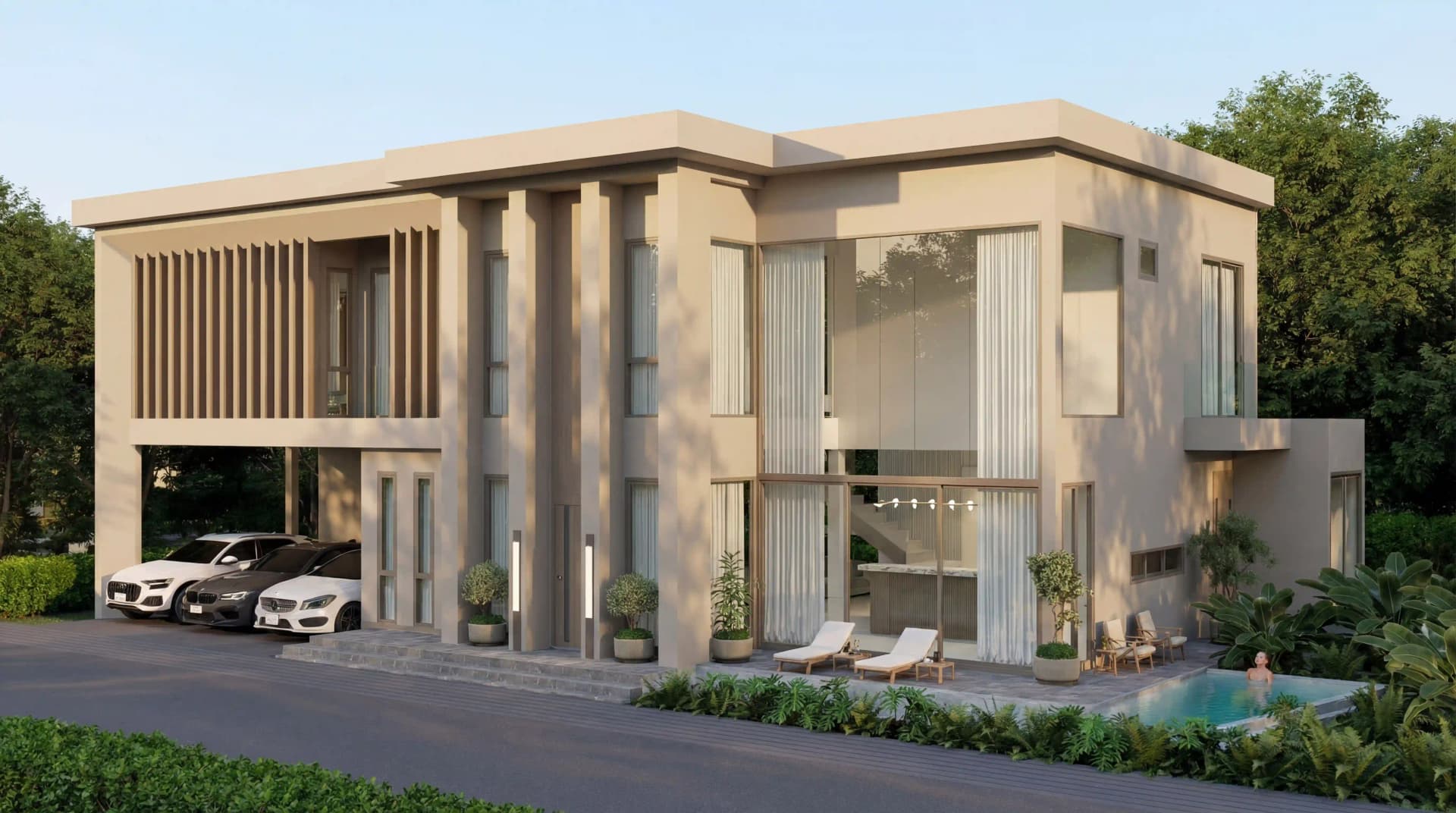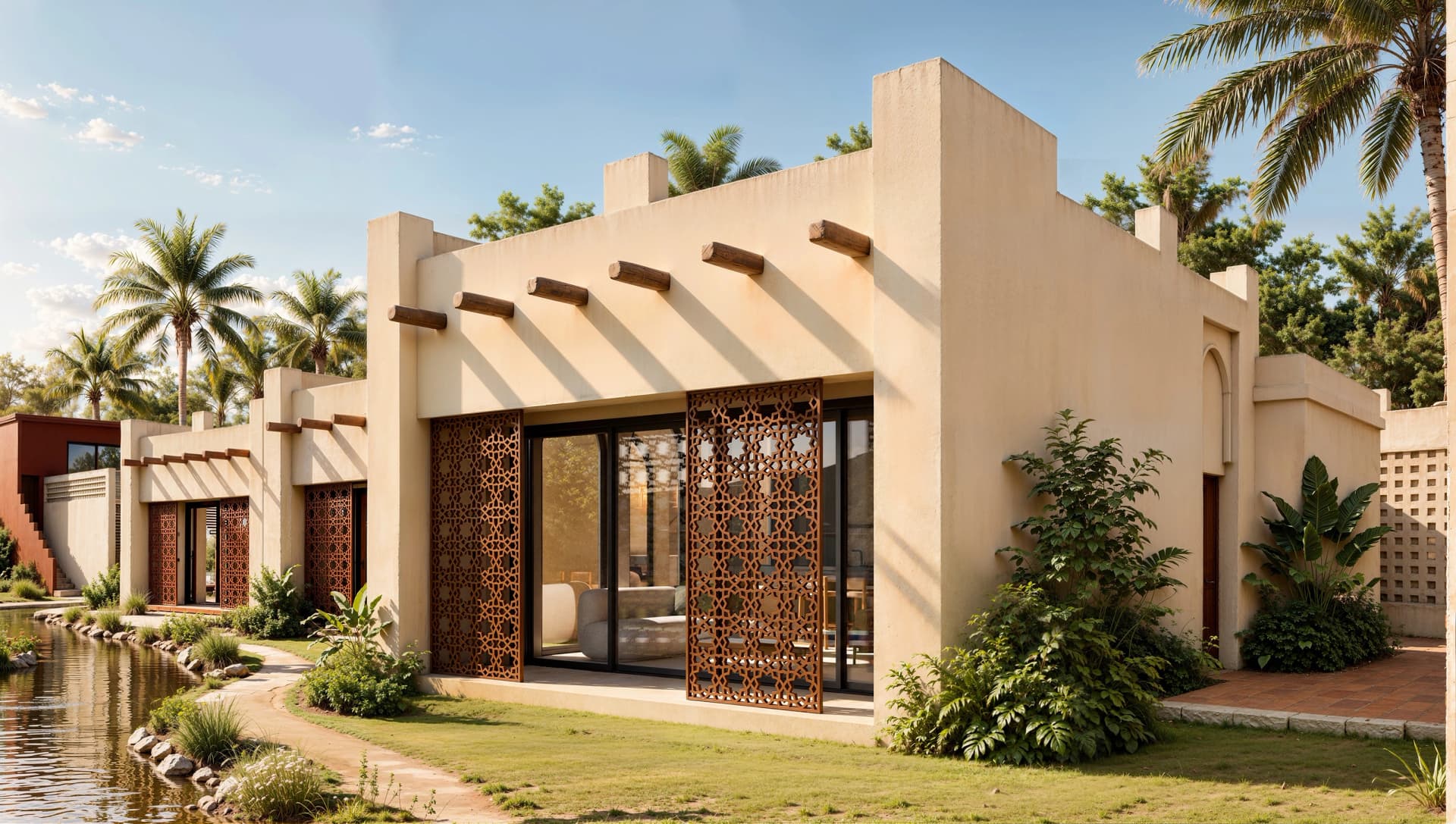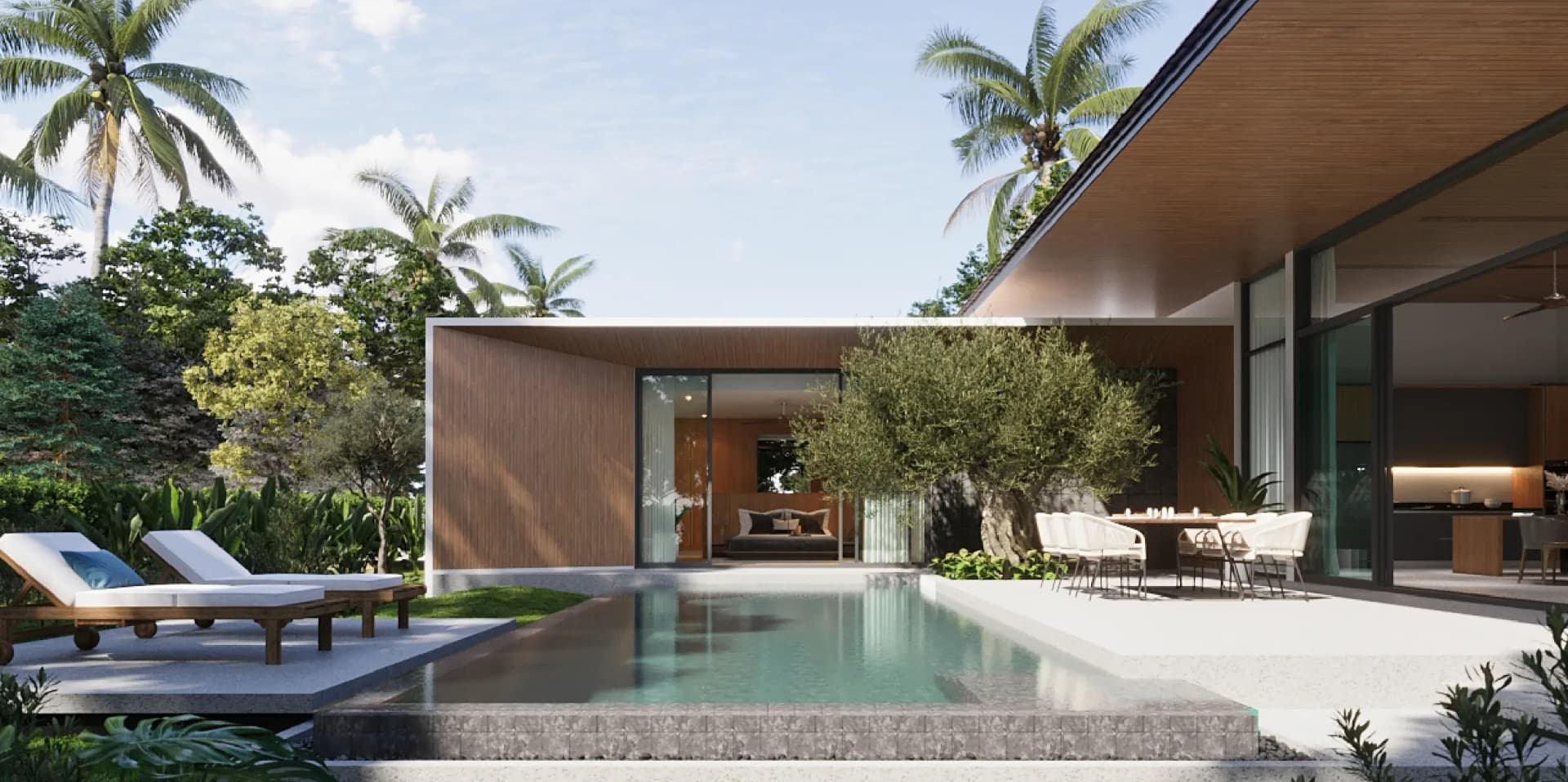
Buying a pool villa in Thailand is different from buying a condo. A foreigner can own a condo unit freehold, but Thai law does not allow foreigners to own land in their own name. Every villa structure is a way of dealing with that rule. This guide explains the main options and what to check.
01The basic rule: land and building are separate
In Thailand the land and the house on it can belong to different people. A foreigner cannot own the land, but can own the building. Most villa structures combine a right to use the land with ownership of the house.
02Leasehold
Leasehold is the most common and most transparent way for a foreigner to hold a villa.
- The land, and often the villa, is leased to you for up to 30 years. The lease is registered at the Land Office and noted on the title deed.
- Contracts usually include options to renew for further periods, often written as 30 + 30 + 30 years. Only the first 30-year period is registered. Renewals are a contractual promise from the landowner, not a guaranteed right.
- The lease can usually be transferred to a buyer or left to your heirs, depending on the contract.
- Registration costs 1% of the total lease amount plus 0.1% stamp duty.
Many developers combine the land lease with freehold ownership of the building itself, registered in the foreigner's name with a building permit. This is often described as "leasehold land, freehold villa".
03Thai limited company
Some villas are sold through a Thai company that owns the land. A foreigner can hold up to 49% of the shares, and the majority must be held by Thai shareholders.
- The Thai shareholders must be genuine investors. Using nominee shareholders who only lend their names is illegal under the Foreign Business Act and can lead to the land being lost.
- A company has running costs: accounting, annual audits and tax filings.
- This route suits buyers with a real business purpose. For a private holiday home, leasehold is usually simpler and safer.
04Other rights over land
- Usufruct: the right to use and earn income from someone else's land, for a fixed period or for life. It is registered at the Land Office.
- Superficies: the right to own buildings on someone else's land, for a fixed period or for life. It is often combined with a lease.
- Ownership through a Thai spouse: the land is owned by the Thai spouse. The foreign spouse must sign a statement that the money belongs to the Thai spouse, so it gives the foreigner no ownership right to the land.
05Freehold land for foreigners
Section 96 bis of the Land Code allows a foreigner to buy up to one rai (1,600 sqm) of land for a residence if they invest at least 40 million baht in approved forms in Thailand and hold it for at least five years. Approval is needed from the Ministry of Interior and the route is rarely used in practice.
06What to check before you buy
- The land title deed type. A Chanote (Nor Sor 4 Jor) is the strongest title. Ask for a copy and have a lawyer check it at the Land Office.
- Who owns the land and whether there are mortgages or other rights registered on it.
- The building permit and the zoning rules for the plot.
- Exactly what is registered: the lease, the building ownership, any superficies, and for how long.
- What happens to your rights if the landowner sells the land or dies.
- How the renewal options are written and whether they pass to your heirs.
07Choosing the right structure
For most foreign buyers of a holiday home or rental villa, a registered leasehold with ownership of the building is the clearest option. If a project only offers a company structure, ask why, and have the company documents and shareholders checked before you pay a deposit.
This guide is general information, not legal or tax advice. Rules, fees and bank requirements change, so check the details of your own purchase with a licensed Thai lawyer before you sign or pay.